

I. Basic Characteristics and Application Scope of Tile Adhesive
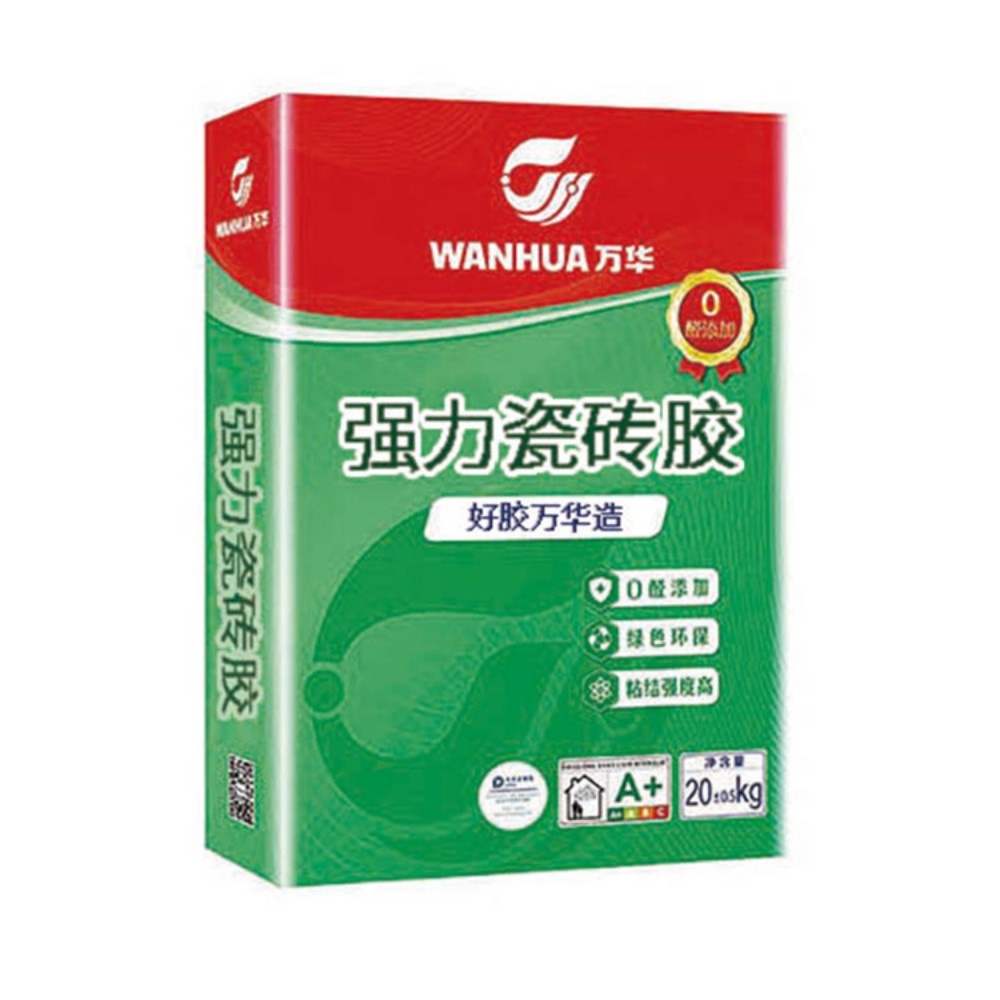
Tile adhesive is a polymer-modified cement-based adhesive, a high-quality auxiliary material specially used for pasting decorative materials such as ceramic tiles, face bricks, floor tiles and stones in modern decoration. It is made of cement, quartz sand, polymer powder and multiple additives through scientific proportioning, forming a paving material with strong bonding force and excellent construction performance. It not only solves the problems of hollowing, falling off and insufficient bonding force easily caused by traditional cement mortar paving, but also has core advantages such as high bonding strength, anti-sagging, water resistance, freeze-thaw resistance and aging resistance. A thin-layer construction can achieve firm bonding, greatly improving paving efficiency and project quality. It is fully suitable for tile paving on all kinds of conventional floors.
In terms of application scenarios, tile adhesive can be widely used in indoor living rooms, bedrooms, kitchens, bathrooms, balconies, as well as outdoor terraces, corridors and other ground areas, adapting to conventional base surfaces such as cement mortar leveling layers and concrete base layers, making it an ideal choice for floor tile paving.
II. Selection Guide of Tile Adhesive for Floor Tiling
Different floor tile materials, sizes and usage scenarios require different types of tile adhesive. Proper selection is the key to ensuring paving effect:
- Standard Tile AdhesiveSuitable for small-size ordinary ceramic floor tiles and glazed tiles (such as 300mm×300mm, 400mm×400mm), mostly used in indoor dry areas to meet basic daily household paving needs.
- Enhanced Tile AdhesiveFor large-size floor tiles such as 600mm×600mm and 800mm×800mm, or wet ground scenes such as bathrooms and kitchens for a long time. It has stronger bonding force and better anti-slip performance, avoiding hollowing and displacement of large tiles.
- Heavy Tile AdhesiveSpecially used for paving high-density and heavy-weight stones/tiles such as marble, granite, vitrified tiles and full-body ceramic tiles. Its super-strong bonding force can bear heavy weights and prevent falling off.
III. Key Points of Tile Adhesive Construction for Floor Tiling
1. Base Surface Pretreatment
- The base surface must be flat, solid, free of hollowing, sanding, oil stains and floating dust. Uneven parts shall be leveled and repaired with cement mortar.
- Wet the base surface properly before construction to keep it wet outside and dry inside, avoiding excessive water absorption of the base layer affecting the curing of tile adhesive.
2. Mixing Tile Adhesive
Add water strictly according to the product instructions, mix with an electric mixer until it becomes a uniform paste without agglomeration. Let it stand for 5-10 minutes and mix again to improve bonding performance.
3. Uniform Adhesive Coating
Scrape the mixed tile adhesive evenly on the ground with a notched trowel. The adhesive layer thickness is controlled at 3-5mm with consistent thickness. Avoid local over-thickness causing shrinkage cracking or under-thickness leading to weak bonding.
4. Tile Laying and Correction
Press the tiles smoothly into the adhesive layer and rub gently into place. Leave joints as designed (usually 1.5mm-3mm). Check flatness with a level throughout the process. Fine-tuning is allowed before the tile adhesive initial sets.
5. Curing and Joint Filling
Let stand for more than 24 hours after paving until the tile adhesive is completely cured. Then clean and fill the gaps with matching sealant. Choose a sealant color coordinated with the tiles to improve aesthetics and waterproofness.
IV. Summary of Advantages of Tile Adhesive for Floor Tiling
- Firm bonding, greatly reducing the probability of hollowing and falling off;
- Thin-layer construction, saving materials and space, reducing ground load;
- Water and aging resistance, stable in humid environments;
- Convenient construction, no need to soak tiles, more efficient than traditional cement mortar.
In conclusion, tile adhesive can be fully used for floor tiling, and it is a safer, more efficient and durable solution for floor tile paving. As long as proper selection and standardized construction are done, long-term service effect can be guaranteed.