


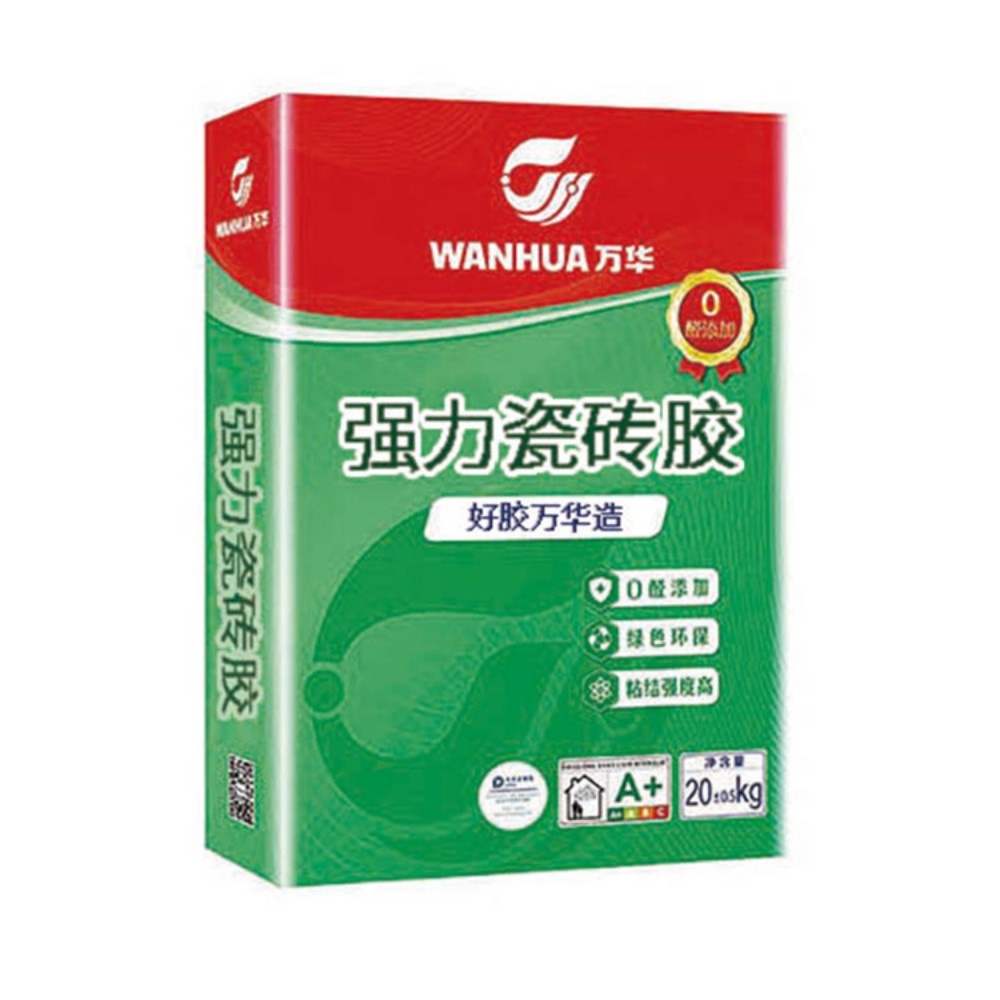
The preparation of materials before thin-layer tile adhesive construction is a critical step that determines installation quality, service durability, and overall aesthetics. Scientific selection, precise matching, and standardized collocation can effectively avoid common problems such as hollowing, detachment, cracking, and water penetration, while improving construction efficiency and delivery quality. This article systematically explains the key points of core material matching before thin-layer installation from the dimensions of tile adhesive selection, auxiliary material collocation, base treatment, and quality control.
I. Precise Selection of Tile Adhesive (Core Matching Principles)
1. Matching by Tile Water Absorption
For low-water-absorption tiles (water absorption ≤ 0.5%), such as vitrified tiles, slate, marble, and quartz tiles, which feature dense surfaces and high bonding difficulty, flexible tile adhesive of Grade C2 or above must be used. Such adhesive has a standard tensile bond strength of ≥1.0MPa and remains ≥0.5MPa after freeze-thaw cycles, ensuring long-term firm bonding and greatly reducing the risks of hollowing and detachment.
2. Matching by Tile Size
For large-format tiles of 600mm×600mm and above, which are heavier and prone to slipping, flexible and thickened tile adhesive conforming to C2TES1 standard shall be selected. The product must provide an open time of ≥20 minutes for easy positioning and adjustment, and a slip value of ≤0.5mm to prevent sinking and shifting during installation and ensure flatness.
3. Matching by Application Environment
For long-term humid areas such as bathrooms, kitchens, balconies, and swimming pools, water-repellent and impermeable tile adhesive is preferred. It features excellent water-blocking and moisture-resistant properties, preventing moisture from penetrating the bonding layer to avoid freeze-thaw damage, pulverization, and debonding, thus extending the service life of the tiling system.
II. Coordinated Collocation of Auxiliary Materials (Systematic Supporting Scheme)
1. Backing Adhesive: Strengthen Interface Bonding
For low-water-absorption and high-density tiles, tile adhesive alone cannot achieve optimal bonding. A special backing adhesive must be evenly applied to the back of the tiles. The backing adhesive penetrates the micropores of tiles to form a strong transition interface, significantly enhancing the bond between tiles and tile adhesive and reducing hollowing at the source.
2. Caulking Materials: Improve Details and Protection
Select matching caulking materials according to decoration style, tile color, and application scenario:
- Grout: Easy to construct, rich in color, and highly decorative, suitable for most indoor spaces;
- Epoxy colored sand: High hardness, wear-resistant, stain-resistant, waterproof, and mildew-proof, ideal for high-demand places such as bathrooms, kitchens, balconies, and commercial spaces.
3. Leveling Materials: Base Pre-Treatment
Base flatness is the foundation of the thin-layer method. When the flatness deviation of walls or floors exceeds 3mm, pre-leveling is mandatory:
- Cement-based self-leveling compound: Good fluidity, self-leveling, and uniform surface, suitable for large-area floor leveling;
- Fast-drying leveling mortar: Fast hardening and rapid strength development, shortening the construction period and suitable for walls and local quick leveling.
III. Key Points of Supporting Management Before Construction
- Material Calculation: Calculate accurately based on tile area and theoretical consumption of tile adhesive to avoid waste or shortage;
- Quality Inspection: Check the brand, model, production date, and inspection report of incoming materials to ensure compliance with national standards;
- Tool Preparation: Prepare special tools such as notched trowels, scrapers, mixers, leveling rulers, and rubber hammers;
- Storage Specification: Store tile adhesive, backing adhesive, caulk, etc., in a dry and ventilated place in sealed packages, away from moisture, direct sunlight, and freeze-thaw conditions.